Business Waste Removal in Aldgate

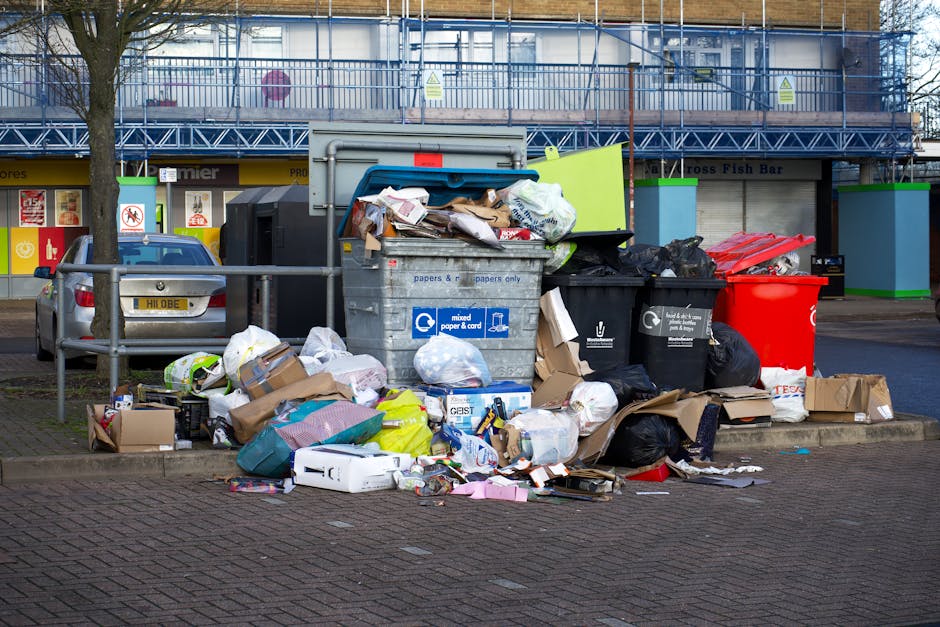
Business waste removal in Aldgate needs to be practical, orderly and suited to the way premises actually operate. Our service covers the collection and removal of commercial waste streams from offices, retail units, hospitality venues and other workplaces that need regular or one-off clearances. We handle mixed non-hazardous waste, bulky items and routine commercial refuse with a focus on keeping the process straightforward for the customer and manageable for the site.
That can include the removal of office furniture, archived paperwork for confidential shredding, broken fixtures, shop fittings and general waste that has built up after a move, refit or stock change. Where items can be separated for reuse or recycling, we sort them sensibly; where they cannot, we remove them in the most efficient way available. If you need a clearer picture of what is included, start with the type of waste, the access and the volume, then ask for a quotation. Plain details are usually enough to establish the right approach.
For businesses planning ahead, it helps to think about the job in terms of what needs lifting, how the material is stored and whether it can be removed without disrupting staff or customers. If the task is part of a larger change, such as vacating a floor or clearing after works, we can build the waste removal around that sequence rather than treating it as a separate nuisance. Clear instructions at the outset save time later, especially where there are access limits, loading restrictions or items that need to be taken apart before they move.
Commercial waste collections for everyday premises
Business waste is rarely uniform, so a useful service has to cope with different materials in the same visit. In practice, that may mean bagged general rubbish, packaging, outdated stock, office chairs, shelving, display units and assorted loose items that have accumulated behind the scenes. Our waste removal service is designed to deal with those mixed loads in a calm, methodical way, with attention to keeping usable material separate where it makes sense to do so.
Many customers want a removal that supports day-to-day trading rather than interrupting it. For that reason, it is sensible to plan around opening hours, building access and the way the space is used. A reception, trading floor or shared commercial building may need different handling from a back office or storage room. Pricing and quotes are best discussed against the actual load, so the quotation can reflect the time, labour and vehicle space involved without guesswork.
Typical commercial clearances may involve:
- bagged business rubbish and mixed non-hazardous waste
- desks, chairs, cabinets and other office furniture
- retail packaging, stock overhang and display items
- bulky pieces that are awkward to move through standard doorways
- job-specific clearances after a move, change of use or refit
Office waste removal and workspace clearances
Office waste removal often requires more care than a standard disposal job because workspaces tend to contain a mix of furniture, equipment, archived paperwork and personal items that need to be handled in the right order. We remove unwanted office contents, including desks, meeting room furniture, storage units, chairs and non-sensitive waste, while keeping the job organised around the building layout and the way people use the space.
Where items are still in reasonable condition, there is often a decision to be made between disposal and reuse. That decision depends on condition, volume and the practical requirements of the premises, not on an assumption that everything must be thrown away. Office clearances can also involve furniture disposal when broken or unwanted desks, tables and seating have reached the point where repair is no longer worthwhile. A sensible plan avoids cluttering corridors and minimises repeated handling.
Useful office work may also include lighter strip-outs, collection of loose contents from storage cupboards and removal of redundant items after team changes or relocations. In a busy building, it is often better to work section by section so essential areas stay usable for as long as possible. That approach suits businesses that need the removal to feel controlled rather than disruptive, particularly when several rooms or departments are involved.
Furniture, fixtures and bulky item disposal
Commercial premises often accumulate large items that are difficult to shift without equipment, planning or a clear route out of the building. Furniture clearance can cover desks, filing cabinets, reception units, shelving, meeting tables and other bulky contents that are no longer required. We also deal with selected fixtures and fittings where removal is part of a refurbishment, relocation or closure and where the items are ready to leave the site.
When bulky pieces are involved, the main decisions are usually about access, dismantling and sorting. Some items are better taken apart before removal, especially if stairwells, narrow doors or shared corridors need to be protected. Others can be taken out intact if the route allows it. Where the load includes specialist items, such as a fridge, freezer or other appliance, separate handling may be needed, and fridge and appliance removal is the more appropriate route for those pieces.
We also support businesses that want a clean finish after replacing older furniture. That may involve taking away matching sets, odd damaged pieces or surplus stock that has become difficult to store. One clear list of what is staying and what is leaving usually makes the whole process smoother, particularly when several rooms are being cleared in one visit.
Clearance support for stockrooms, garages and storage areas
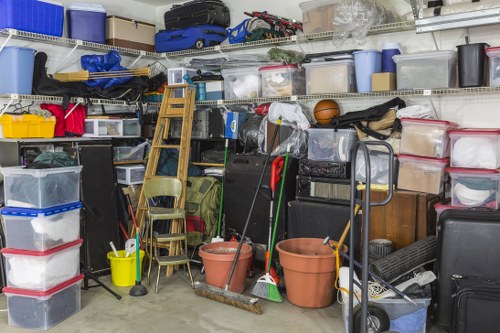
Back-of-house storage spaces often become catch-all areas for old packaging, redundant equipment, damaged stock and items that were temporarily put aside and never returned to use. Garage clearance and similar storage clearances are useful when a business needs to reclaim floor space, make an area safer to move through or prepare a room for a different purpose. The work can involve stacked goods, awkward mixed items and materials that have been in place for some time.
These clearances are best approached methodically. First, the contents need separating into items that will stay, items that can be removed and any materials that need special handling. Then the work can be carried out in a way that avoids unnecessary damage to walls, doors or shelving. If the room contains mainly household-type contents rather than business stock, a broader flat clearance style of service may be more suitable for the overall job, depending on how the space is being used.
Storage clearances often reveal mixed items that no longer have a single obvious purpose. That is normal. The aim is not to force the contents into one category, but to remove what is redundant in a sensible sequence and leave the area ready for cleaning, reuse or further fit-out. A measured approach is particularly helpful where the contents have been packed tightly or where access is partly blocked.
Waste removal for refurbishments, moves and changeovers
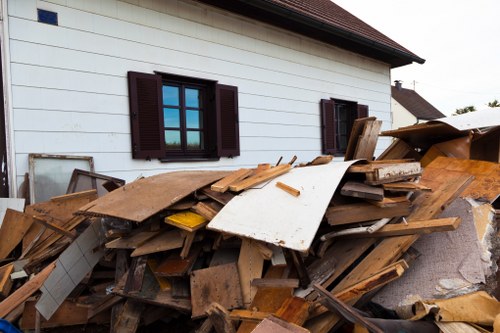
Refurbishment waste removal supports premises that are changing shape, changing layout or changing tenant. It may include offcuts, packaging, old displays, redundant fittings and general debris that appears once the work starts to move forward. Builders waste clearance is often relevant when the material comes from minor works or strip-outs rather than a simple tidy-up, because the load can include heavier mixed waste that has to be lifted and sorted carefully.
Changeover jobs are usually easier when the waste removal is timed around the rest of the work. For example, clearing after a fit-out may require a different order from clearing before decorators arrive. The same principle applies to office moves, unit handovers and vacated floors: the removal should support the next stage, not create another bottleneck. Where the site has mixed waste and reusable furniture, the load can be broken down into workable sections instead of being treated as a single pile.
After a refurbishment or move, businesses often need a final sweep of the areas most affected by storage and packing. That may be a plant room, a rear office, a corridor or a loading area. The key point is to remove the remaining waste in a way that keeps the site accessible and ready for the next trades or occupants. Good sequencing matters more than speed alone.
Sorting, recycling and responsible disposal
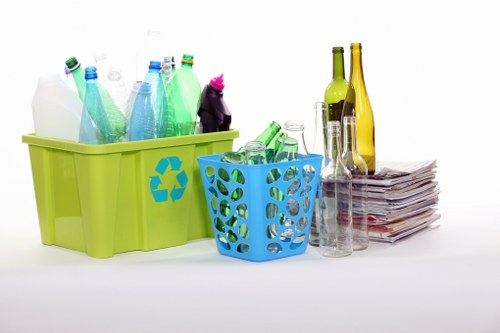
Commercial waste removal works best when the load is sorted before it leaves the site. That is because mixed items can often be separated into categories that are easier to handle, with recyclable materials kept apart from general waste where practical. We apply that approach to appropriate business loads so that removal is not just about moving items away, but about handling them in a way that makes operational and environmental sense.
For some businesses, the most useful decision is whether a clearance should focus on reusable, recyclable or disposal-only material first. Cardboard, certain metals, furniture in fair condition and other recyclable items may need different handling from damaged or contaminated waste. Our recycling and sustainability page explains the broader principles we use when managing waste responsibly. Not every item will be suitable for recovery, but separating what can be reused from what cannot can make the overall process more efficient.
Not all waste streams are the same, and some materials require more careful assessment than others. If a load includes items that are restricted, awkward or uncertain, it is better to identify them early rather than leave them mixed into the general waste. That helps the removal stay orderly and avoids delays once collection begins. The practical aim is simple: take away what needs to go while keeping the process as responsible as possible.
Special cases and items that need separate handling
Some business waste cannot be treated as ordinary mixed rubbish. Items such as appliances, certain furniture pieces, archived records and materials with safety concerns may need a separate plan before removal starts. Where appropriate, we can address these as part of a wider clearance rather than forcing everything into one undifferentiated load. That means the right route is chosen for the item, not merely the nearest one.
When premises contain more specialised waste, the question is usually whether the item can be moved safely, whether it needs to be detached from a fixed position and whether it belongs in a dedicated disposal stream. For example, archived files may need secure handling, bulky mattresses or seating may be easier to deal with through a specific disposal route, and certain materials may require extra care. If the waste includes items that are not suitable for ordinary clearance, the appropriate service should be matched to the load rather than guessed.
It also helps to keep a practical eye on what remains after the main removal. A space that still contains one or two awkward items can be harder to reuse than a room that has been fully cleared. For that reason, many customers prefer to finish off the outliers at the same time. That avoids repeated visits and leaves a cleaner result, especially when the site is being handed over or repurposed.
About Aldgate
Aldgate sits at the eastern edge of the City of London and has long been one of the capital’s most recognisable gateways. Its name comes from one of the historic entrances in the London Wall, and the district developed around a crossroads where routes into the city met the old defensive line. Today the area is defined by a striking mix of historic fabric and modern commercial development. The streets around Aldgate and Aldgate East connect to the City, Whitechapel and the eastern reaches of central London, giving the district a busy but layered urban character. Nearby landmarks include the outline of the old wall, fragments associated with Roman and medieval London, and later buildings that show how the area has changed over time. The district also has strong links to migration, trade and finance, which have shaped both its architecture and its cultural identity. Victorian warehouses, restored commercial buildings and newer towers sit close together, creating a streetscape where different centuries remain visible in a compact area. Public transport has reinforced that role as a connector, with Underground stations and major streets bringing people through the district from several directions. Close by, the edge of the City, the commercial corridors to the east and the varied neighbourhoods around Whitechapel contribute to a dense urban setting with offices, services, homes and passing foot traffic. The result is a place that feels both historically important and thoroughly contemporary, with its past still legible in the street plan and its present expressed through commerce, movement and redevelopment.
Planning a quotation and arranging access

To prepare a quotation, it helps to be clear about the type of waste, the approximate volume and any access issues that could affect the removal. If the job involves stairs, shared corridors, limited parking, lift use or a tight loading point, those details matter because they affect how the work is organised. In most cases, a short description and a few practical notes are enough to quote accurately without overcomplicating the process.
It is also useful to say whether the waste is loose, bagged, boxed or stacked, and whether anything needs dismantling before it can be moved. If the clearance forms part of a larger change, such as a move or fit-out, mention the sequence so the removal can be fitted around it. Contact us when you are ready to talk through the job, or use the online booking route if you prefer to set out the details in writing and request a quotation that matches the actual work.
For businesses that want a structured way to move ahead, the simplest approach is often to separate the task into three parts: what has to go, what stays, and what needs special handling. That keeps the request concise and helps the removal stay focused. When the scope is clear, the service is easier to plan, and the final result is usually cleaner and more efficient.
Business waste removal for offices, shops and managed premises
Not every commercial property produces the same kind of waste, so the service needs to work across different settings without losing its focus. Offices may generate desks, paper archives and redundant equipment; shops often need the removal of display units, packaging and stock overhang; managed premises may need a tidy removal after tenants leave items behind. The right commercial waste removal service adapts to the shape of the load rather than trying to force every job into the same pattern.
That flexibility is especially useful where several different streams appear at once. A single job may include office furniture, loose rubbish, cardboard and a few items that need separate treatment. In those cases, it is better to handle the work in a planned sequence than to strip the site blind. If the premises include domestic-style contents as well as business waste, related services such as house clearance or home clearance may be relevant depending on the nature of the property and the job in hand.
The overall aim remains consistent: remove the waste that is no longer useful, keep the process orderly, and leave the premises easier to use, hand over or clean. Businesses often value that straightforward outcome as much as the collection itself. If you need waste removed from a workplace in Aldgate, a clear description of the load is the best place to begin. Ask for a quotation when you are ready to compare the practical options.